


Preparing for exams at the last minute can feel stressful, overwhelming, and exhausting for many students. However, smart revision can still make a significant difference even when time is limited. Thousands of UK students, including learners from institutions like University of Law (ULaw), often search for practical ways to improve grades quickly before exams. The good news is that last-minute exam revision strategies that actually work are based on science, planning, and focused study techniques rather than panic or endless rereading.
Students frequently struggle with time management, concentration, and information overload during exam season. This is especially true for university learners balancing coursework, Online essay writing assignments, part-time jobs, and academic pressure. Many students also seek Help with master thesis projects while preparing for final assessments, making efficient revision even more important. In competitive UK education environments, strong essay writing skills, effective revision techniques, and proper essay writing format knowledge are essential for academic success.
At Online Essay Writing, students regularly look for guidance on how to revise effectively in a short amount of time. This guide explores the best revision methods, practical study strategies, and proven last-minute exam preparation techniques that genuinely help students improve performance under pressure.Students also read and search about help with master thesis.
Why Last-Minute Revision Can Still Be Effective
Many students assume that revising close to exams never works. In reality, focused revision sessions can significantly improve memory recall and exam confidence when approached strategically. The brain responds better to active learning and concentrated study rather than passive reading for long hours.
One reason last-minute revision helps is because urgency increases focus. When students have limited time, they are more likely to concentrate on high-priority topics and avoid distractions. This targeted approach often produces better short-term recall for exams.
Students in UK universities are increasingly using structured revision frameworks alongside Online Essay writing Services Uk support systems to balance academic workloads. Combining smart study techniques with practical essay writing tips helps students strengthen both exam preparation and coursework performance.
What Is the Best Way to Revise Last Minute?
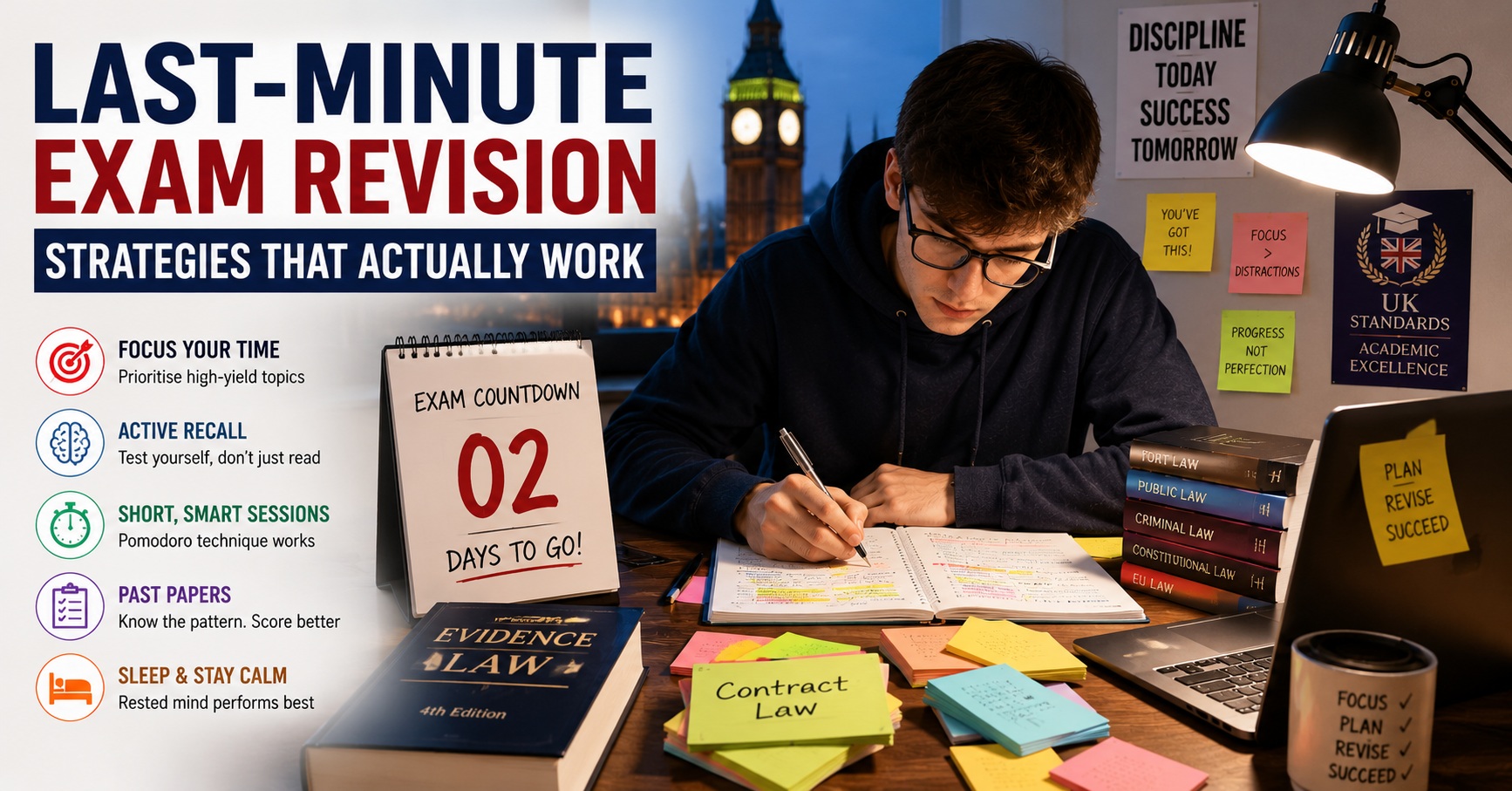
The best way to revise last minute is to focus on active recall, prioritisation, and short intensive study sessions. Instead of trying to relearn entire subjects, students should identify key concepts most likely to appear in exams.
Start by reviewing lecture slides, summaries, past papers, and highlighted notes. Focus on understanding major themes rather than memorising every detail. Students who repeatedly test themselves using questions and flashcards usually remember information more effectively than students who simply reread textbooks.
Creating a realistic revision timetable also helps reduce anxiety. Even if only one day remains before the exam, dividing time into focused study blocks improves productivity. Many UK students use the Pomodoro technique, studying for 25 minutes followed by a 5-minute break to maintain concentration levels.
Strong essay writing skills are also useful during exam preparation because many university exams require analytical and structured written answers. Understanding essay writing format principles helps students organise ideas quickly during timed assessments.
How to Revise for Exams in One Day
Revising for exams in a single day requires discipline and prioritisation. The key is not to cover everything but to focus on high-value topics and recurring concepts.
Begin the day by identifying the most important areas of the syllabus. Review class notes, teacher guidance, and past exam trends. Topics that frequently appear in exams deserve the most attention. Students should avoid spending excessive time on minor details unlikely to contribute significantly to marks.
Active recall remains one of the best revision methods for one-day preparation. After reading a topic, close the notes and explain the concept aloud from memory. Teaching information to yourself forces the brain to retrieve knowledge actively, improving retention.
Mind maps and condensed notes are also effective revision techniques for students facing time pressure. Visual summaries help simplify complex information and improve memory connections.
Students preparing academic assignments alongside exams often benefit from external academic support. Services offering Help with master thesis guidance or Online Essay writing Services Uk assistance can reduce workload pressure and create more time for focused revision.
The 2-3-5-7 Revision Method Explained
One increasingly popular revision strategy is the 2-3-5-7 revision method. This method is based on spaced repetition, which strengthens memory through repeated review intervals.
The process works like this:
- Review information after 2 hours
- Revise again after 3 days
- Review once more after 5 days
- Final revision after 7 days
This approach improves long-term memory retention because the brain strengthens neural connections through repeated exposure. Even students preparing last minute can adapt this system by reviewing difficult topics multiple times across shorter intervals.
The 2-3-5-7 revision method is particularly effective for subjects requiring memorisation, such as law, medicine, psychology, and business studies. Students at institutions including University of Law (ULaw) often apply spaced repetition strategies to improve legal concept retention and exam confidence.
How to Revise Quickly Before an Exam
Quick revision before exams requires students to study intelligently rather than excessively. Long study marathons often reduce concentration and increase fatigue. Instead, effective revision depends on quality focus sessions.
One of the best strategies is completing past papers under timed conditions. Past papers reveal question patterns, common themes, and examiner expectations. Students also become familiar with time management during exams.
Another useful method involves focusing on weak areas first. Many students waste time revising topics they already understand while ignoring difficult concepts. Prioritising weaknesses creates faster improvement.
Nutrition and sleep also affect exam performance significantly. Students revising all night often experience poor concentration, low memory recall, and mental exhaustion during exams. Short sleep combined with focused revision usually produces better results than sleep deprivation.
Students searching for Online essay writing assignments support often struggle with balancing coursework deadlines and revision schedules. Time management becomes essential during peak academic periods.
Best Revision Techniques for Students
Effective revision techniques help students maximise learning efficiency. The following methods consistently improve academic performance:
Active Recall
Active recall involves testing yourself repeatedly instead of passively rereading notes. Flashcards, quizzes, and self-questioning improve long-term memory retention significantly.
Blurting Technique
This method requires students to write everything they remember about a topic without looking at notes. Afterwards, they compare responses with study materials and identify missing information.
Past Paper Practice
Past papers remain one of the strongest predictors of exam success. They help students understand exam structure, question wording, and marking expectations.
Feynman Technique
Explaining difficult concepts in simple language improves understanding. If students cannot explain a topic clearly, they likely need further revision.
Structured Essay Planning
Many UK university exams include essay-based questions. Understanding essay writing format and developing essay writing skills help students write clearer and more organised answers under timed conditions.
Students using academic support services such as Online Essay Writing often improve both coursework quality and revision management simultaneously.
Does Last-Minute Revision Actually Help?
Yes, last-minute revision can help when students focus on strategic learning instead of panic studying. Although long-term preparation is always preferable, short intensive revision sessions can still improve exam performance considerably.
The effectiveness of last-minute revision depends on three main factors:
- Focusing on high-priority topics
- Using active study methods
- Avoiding burnout and distractions
Students who remain calm and organised usually perform better than those attempting to study entire textbooks overnight. Efficient revision is about understanding core concepts and improving confidence rather than memorising everything perfectly.
Many students also underestimate the importance of mindset. Positive thinking and realistic planning reduce anxiety and improve concentration levels during exams.
Essay Writing Skills and Exam Success
Essay-based exams are common across UK universities, making essay writing skills essential for academic achievement. Even students with strong subject knowledge may lose marks if answers lack structure, clarity, or critical analysis.
Understanding essay writing format helps students organise arguments effectively under timed conditions. Strong introductions, logical paragraphs, evidence-based discussion, and concise conclusions improve exam responses significantly.
Students struggling with coursework pressure often seek Online Essay writing Services Uk support to improve academic writing standards. These services can provide guidance on structure, referencing, research, and critical analysis while students focus on exam preparation.
Similarly, postgraduate students requiring Help with master thesis projects often benefit from expert academic guidance during demanding academic periods.
Top 5 Last-Minute Exam Revision Tips That Actually Work
Students preparing for exams at the last minute should focus on practical strategies that produce immediate benefits.
First, eliminate distractions completely. Social media, notifications, and multitasking reduce revision efficiency significantly.
Second, revise actively rather than passively. Testing yourself improves memory more effectively than rereading notes.
Third, focus on high-frequency exam topics. Prioritising important concepts maximises marks within limited time.
Fourth, stay hydrated and rested. Mental performance declines rapidly without proper sleep and nutrition.
Finally, remain realistic and positive. Perfection is impossible during last-minute revision, but smart preparation can still produce excellent results.
Students balancing exams with Online essay writing assignments should also create structured daily schedules to avoid academic overload.
Final Thoughts
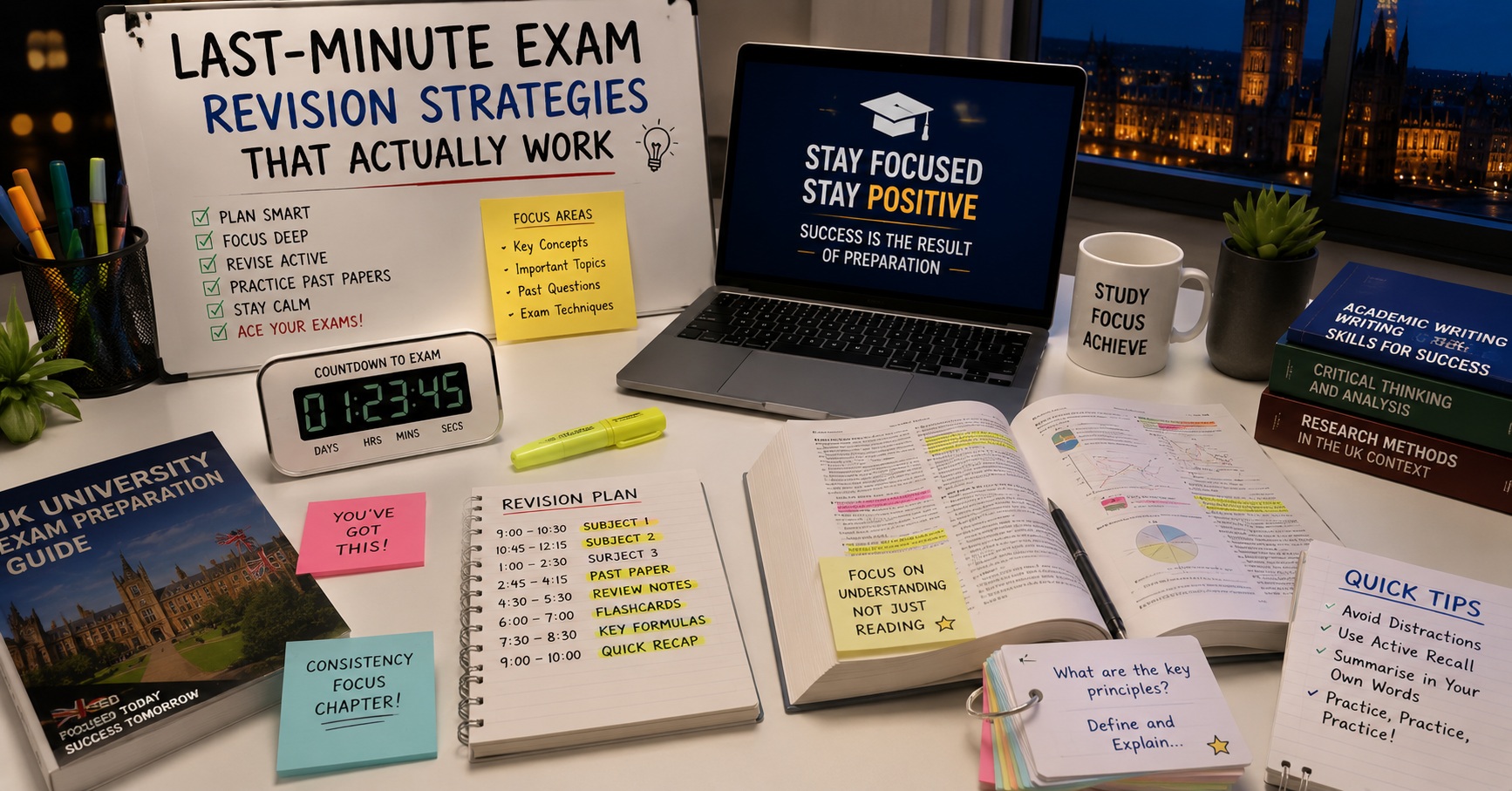
Last-minute exam revision strategies that actually work are based on focus, prioritisation, and active learning. Students do not need to study endlessly to improve performance. Instead, they should concentrate on effective revision techniques, past paper practice, and structured learning methods.
Whether preparing for GCSEs, university assessments, or postgraduate exams, students can significantly improve confidence and results through smart study habits. Combining revision strategies with strong essay writing skills, clear essay writing format understanding, and professional academic support creates a more balanced academic experience.
For students seeking additional academic guidance, Online Essay Writing provides support for Online Essay writing assignments, academic writing improvement, and Help with master thesis assistance aligned with UK academic standards.
Consistent revision, strategic planning, and effective study methods remain the foundation of long-term academic success.

