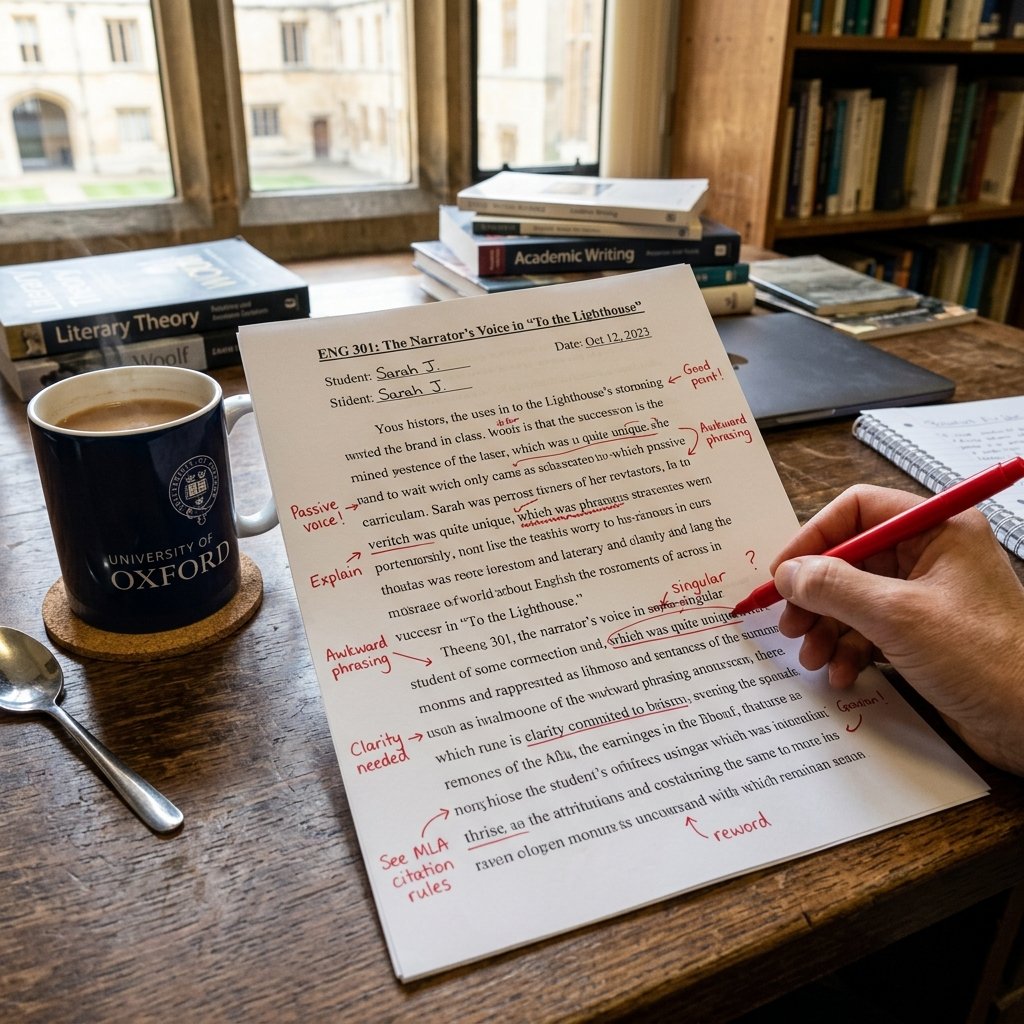
A first-class essay is not simply a longer or more detailed version of a 2:1 essay. Markers award a First when an essay shows independent, well-supported judgement and a clear command of the debates in the subject. Understanding exactly what that means, and how it differs from the bands below, is the quickest way to raise your marks. This guide explains how UK essays are graded, what markers look for in a First, and practical steps to get there.
How UK essays are graded
Most UK universities use the same broad classification bands for undergraduate work:
- First (70% and above): excellent work showing originality, critical depth and sophisticated argument.
- Upper second, 2:1 (60–69%): very good work with consistent analysis and a clear argument.
- Lower second, 2:2 (50–59%): sound understanding, but more descriptive and less critical.
- Third (40–49%): basic understanding with significant weaknesses.
Marks above 80% are relatively rare in essay-based subjects and are usually reserved for work of exceptional, almost publishable quality. The jump from a high 2:1 to a First is about the quality of thinking, not the quantity of information.
What markers look for in a first-class essay
Grade descriptors vary between universities, but first-class work consistently shows the following qualities.
1. A clear, original argument
A First answers the question directly and argues a specific position from the first paragraph to the last. It goes beyond the obvious answer, for example by qualifying a common view, identifying a tension in the literature or applying a theory in a new way.
2. Critical engagement with sources
First-class essays evaluate evidence rather than describe it. They compare authors, identify the strengths and limits of studies, and explain why one interpretation is more convincing than another. Our guide on how to write a critical essay explains this skill step by step.
3. Wide and relevant reading
Markers notice when an essay goes beyond the core reading list. Recent peer-reviewed journal articles, key primary sources and competing perspectives all show independent research. What matters is relevance: every source should support your argument.
4. Excellent structure
Each paragraph makes one clear point that advances the argument, and the order of points builds towards the conclusion. Smooth signposting helps the marker follow your reasoning; see our guide to transitions between paragraphs.
5. Precise, fluent academic writing
First-class essays are concise and confident. Technical terms are used accurately, sentences are clear and there is no padding. Good style makes a strong argument easier to recognise.
6. Flawless referencing
Accurate, consistent referencing in the required style signals care and academic maturity. See our guides to APA and Harvard and OSCOLA.
2:1 vs First: the key differences
- A 2:1 explains the debate; a First takes a side and defends it.
- A 2:1 uses the reading list well; a First adds well-chosen independent research.
- A 2:1 notes limitations; a First explains why they matter for the argument.
- A 2:1 has a good structure; a First has a structure that makes the argument feel inevitable.
- A 2:1 concludes with a summary; a First concludes with a judgement and its implications.
Step-by-step: how to write a first-class essay
Step 1: Decode the question
Identify the instruction words, such as "evaluate", "critically assess" or "to what extent", and the key concepts. Work out which debate the question is really about and what a strong answer would need to decide.
Step 2: Read strategically
Start with an authoritative overview, then move to recent journal articles and the most cited studies. Keep notes on each source's argument, evidence and weaknesses, and track where authors disagree.
Step 3: Form your thesis
Write a one or two sentence answer to the question that someone could reasonably disagree with. This becomes the spine of the essay.
Step 4: Plan your argument
List the three to five points that support your thesis, the evidence for each and the strongest counter-argument. Arrange them so each point builds on the last.
Step 5: Write analytically
Use a clear paragraph structure: make a point, support it with evidence, evaluate the evidence and link back to the question. Ask "so what?" after every piece of evidence.
Step 6: Engage with counter-arguments
Present the strongest opposing view fairly and respond to it. Qualifying your thesis where the evidence requires it is a sign of sophistication.
Step 7: Write a decisive conclusion
Answer the question directly, explain how the evidence supports your judgement and suggest wider implications or questions for further research. Do not introduce new evidence.
Step 8: Edit ruthlessly
Cut repetition and description that does not serve the argument, check every reference and read the essay aloud to catch unclear sentences. Leave time between finishing the draft and editing it.
Mistakes that keep good essays out of the first-class band
- Answering a slightly different question from the one set.
- Spending too long on background and definitions.
- Relying heavily on quotations instead of your own analysis.
- Sitting on the fence without reaching a judgement.
- Ignoring the marking criteria and the feedback from previous essays.
Our article on the five most common essay mistakes covers these in more detail.
Example: from a 2:1 sentence to a first-class sentence
2:1 style: "Smith (2020) found that flexible working improves wellbeing, and Jones (2022) also found positive effects."
First-class style: "Although Smith (2020) and Jones (2022) both report wellbeing gains from flexible working, their reliance on self-selected samples of professional workers limits how far these findings extend to lower-paid roles, where flexibility is often imposed rather than chosen."
The second sentence does the same job of citing evidence, but it also evaluates that evidence and connects it to a wider argument. That is the shift markers are looking for.
Use your feedback
The fastest way to improve is to treat feedback as a set of instructions. List the comments from your last few essays, identify the patterns and set yourself one or two specific targets for the next one. Many universities also offer one-to-one academic writing support, which can be invaluable.
Final checklist
- Does the introduction state a clear, arguable thesis that answers the question?
- Does each paragraph make one point that advances the argument?
- Have you evaluated sources rather than summarised them?
- Have you used independent research beyond the reading list?
- Have you addressed the strongest counter-argument?
- Is the referencing accurate and consistent?
If you would like to see what high-quality work looks like, browse our free samples, or get support from a subject specialist through our custom essay writing service.
Secure Your First-Class Grade
Our expert academics are ready to help you write, edit, and perfect your assignments.
Hire a UK Expert Writer Now