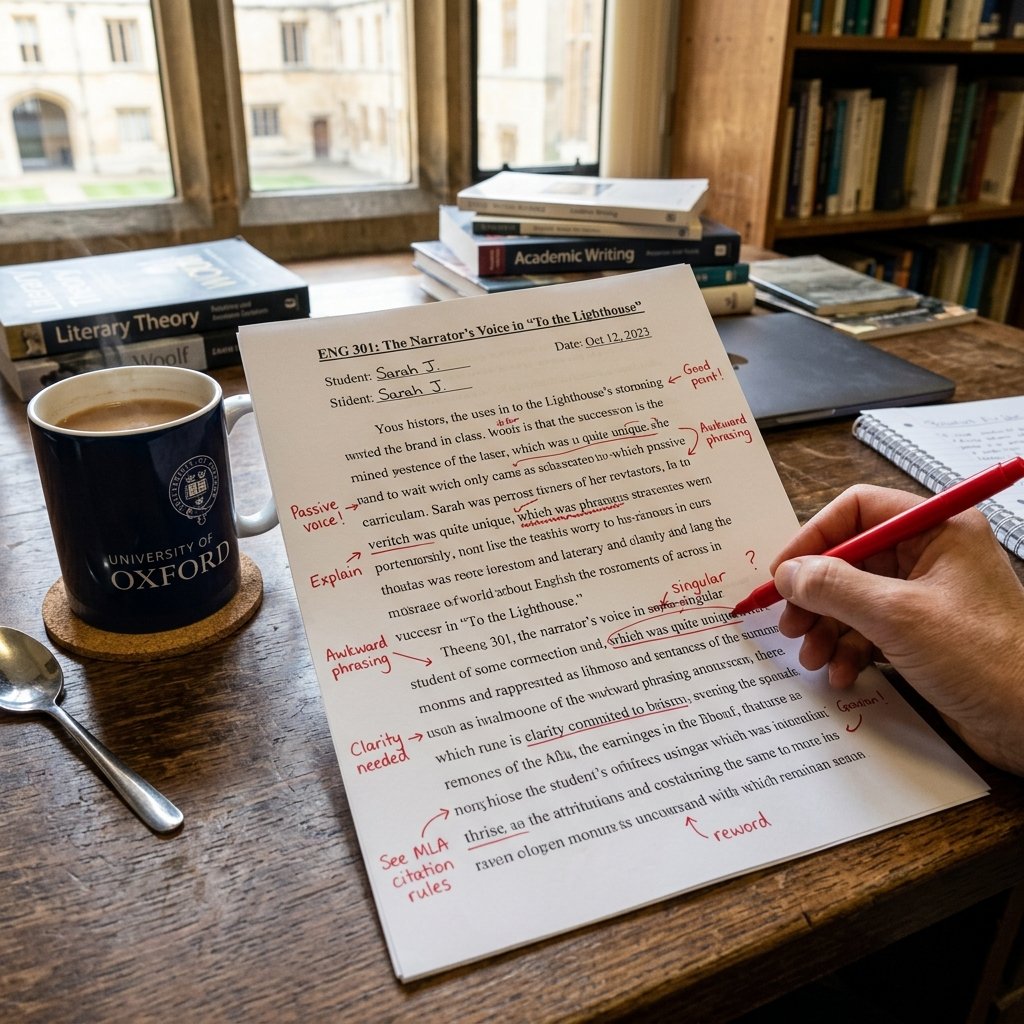
Looking at a good dissertation before you write your own is one of the most effective ways to understand what is expected. A strong sample shows you how a research question is framed, how a literature review builds an argument and how a methodology is justified, things that are hard to grasp from a module handbook alone. This guide explains where UK students can find reliable dissertation examples, how to judge whether a sample is any good and how to use it without risking your academic integrity.
Why dissertation samples are useful
Most students write only one dissertation, so they have no previous experience to draw on. A good sample helps you:
- See the overall structure and how chapters connect.
- Understand the expected depth of analysis at your level.
- Learn academic conventions for your discipline, such as how results are reported or how legal authorities are cited.
- Calibrate your expectations about scope, word count and the number of sources.
Where to find dissertation and thesis samples
Your own university
The best starting point is your own department. Many departments keep a selection of previous high-scoring dissertations for students to consult, and your supervisor may be able to recommend examples. These have the advantage of matching your course requirements and marking criteria exactly.
University repositories
Most UK universities have an open access institutional repository where doctoral theses, and sometimes Master's dissertations, are published. Searching your university library website for "repository" or "theses" will usually find it. Aggregators such as CORE collect open access research outputs from many repositories in one place.
International thesis databases
- ProQuest Dissertations & Theses, available through many university libraries, holds millions of theses, mainly from North America.
- Open Access Theses and Dissertations (OATD) indexes freely available theses from universities worldwide.
- DART-Europe provides access to open access doctoral theses from European universities.
Example dissertations from writing services and websites
Many websites, including ours, publish example dissertations and chapters. These can be useful for structure and style, but check who wrote them, when and at what level. Our free samples and sample nursing dissertation are written by UK academics and labelled with their subject and purpose.
PhD theses vs undergraduate and Master's dissertations
Most freely available "dissertation PDFs" are in fact PhD theses. They are valuable for seeing how research is designed and argued, but they are very different from a taught dissertation:
- Length: a PhD thesis is often 80,000 words or more, while an undergraduate dissertation is usually 8,000 to 12,000 and a Master's 12,000 to 20,000.
- Originality: a PhD must make an original contribution to knowledge; a taught dissertation must show competent independent research.
- Scope: PhD literature reviews and methodologies are far more extensive than you need.
Use PhD theses to learn techniques, not to set your scope. For a closer match, look for Master's or undergraduate examples in your subject.
How to judge whether a sample is good
- Level and grade: do you know what mark it received? A 2:2 dissertation will not show you how to reach a First.
- Discipline: conventions vary widely. A psychology dissertation follows APA structure; a law dissertation uses OSCOLA footnotes and different chapter logic.
- Date: methods, regulations and referencing styles change. Prefer recent work.
- Quality markers: a clear research question, a critical literature review, a justified methodology, analysed findings and accurate referencing.
How to use a sample effectively
- Read for structure first. Note the chapter headings, their order and roughly how many words each one uses.
- Study the introduction. See how the author moves from context to problem to research question and aims.
- Analyse the literature review. Is it organised by theme? How does it end by identifying a gap?
- Look at how methods are justified. Note which sources the author uses to support their choices.
- Compare the discussion with the findings. Notice how results are linked back to the literature.
- Make your own outline. Close the sample and plan your dissertation in your own words, for your own question.
Using samples ethically
A sample is a model to learn from, not material to copy. Submitting someone else's work, or closely paraphrasing it without acknowledgement, is plagiarism and can lead to serious academic misconduct penalties. Similarity checking software such as Turnitin compares your work against published theses, repositories and the web, so copied passages are easily detected.
Safe ways to use samples include learning how chapters are structured, noting useful academic phrases for linking ideas, finding sources in the reference list to read yourself, and understanding the expected level of analysis. If you use an idea or finding from a published dissertation, cite it like any other source.
What to look for chapter by chapter
- Abstract: how the aim, method, key findings and contribution are summarised in around 250 to 300 words.
- Introduction: how the author establishes why the topic matters and states clear aims and objectives.
- Literature review: how themes are organised and how the review moves from what is known to what is missing.
- Methodology: how the research philosophy, design, sampling, data collection, analysis and ethics are explained and justified.
- Findings and discussion: how results are presented clearly and then interpreted against the literature, including unexpected results.
- Conclusion: how the author answers each research question, acknowledges limitations and suggests further research.
Make brief notes on each chapter as you read, focusing on technique rather than content. These notes become a practical checklist when you start drafting your own chapters.
How many samples should you read?
Two or three good examples from your own discipline and level are usually enough. Reading one strong dissertation in depth teaches you more than skimming ten. If you can, compare a high-scoring example with a weaker one: the differences in argument, analysis and structure show you exactly what markers reward.
Common mistakes students make with samples
- Copying the structure of a sample even when it does not suit their own question.
- Using a PhD thesis as a guide to scope and producing an unmanageable project.
- Relying on a sample from a different discipline with different conventions.
- Borrowing wording too closely, which creates similarity problems.
Next steps
Once you have studied a few good examples, turn what you have learned into your own plan. Our guides to writing a first-class dissertation and structuring a Master's dissertation will help, and our article on why dissertations fail shows what to avoid. If you would like expert guidance on your own project, see our dissertation writing services or PhD support.
Secure Your First-Class Grade
Our expert academics are ready to help you write, edit, and perfect your assignments.
Hire a UK Expert Writer Now