

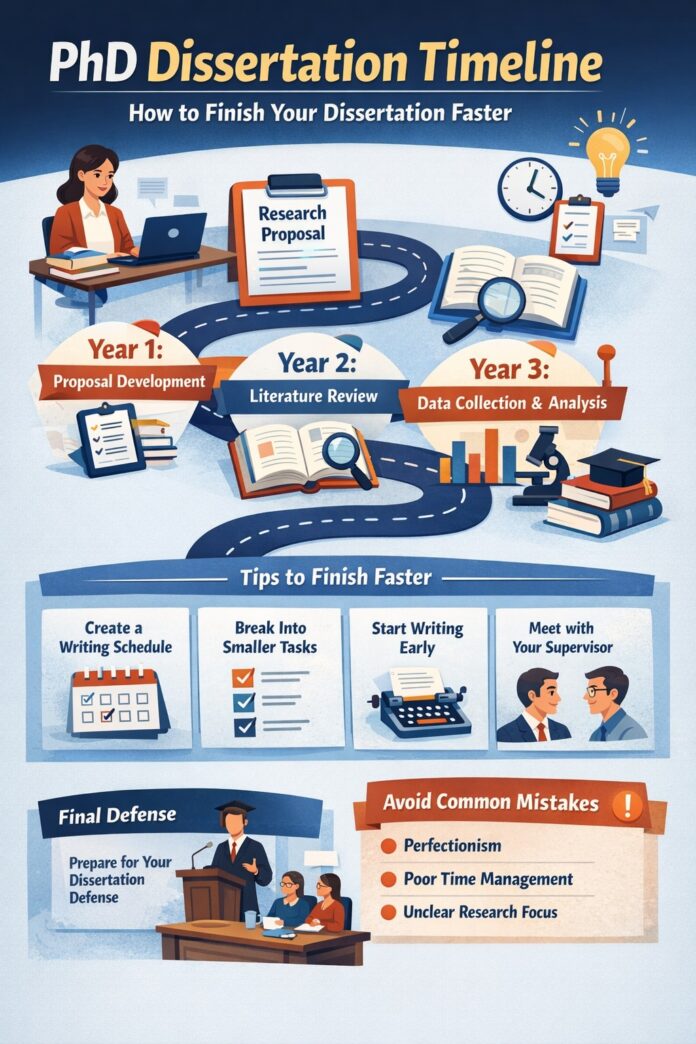
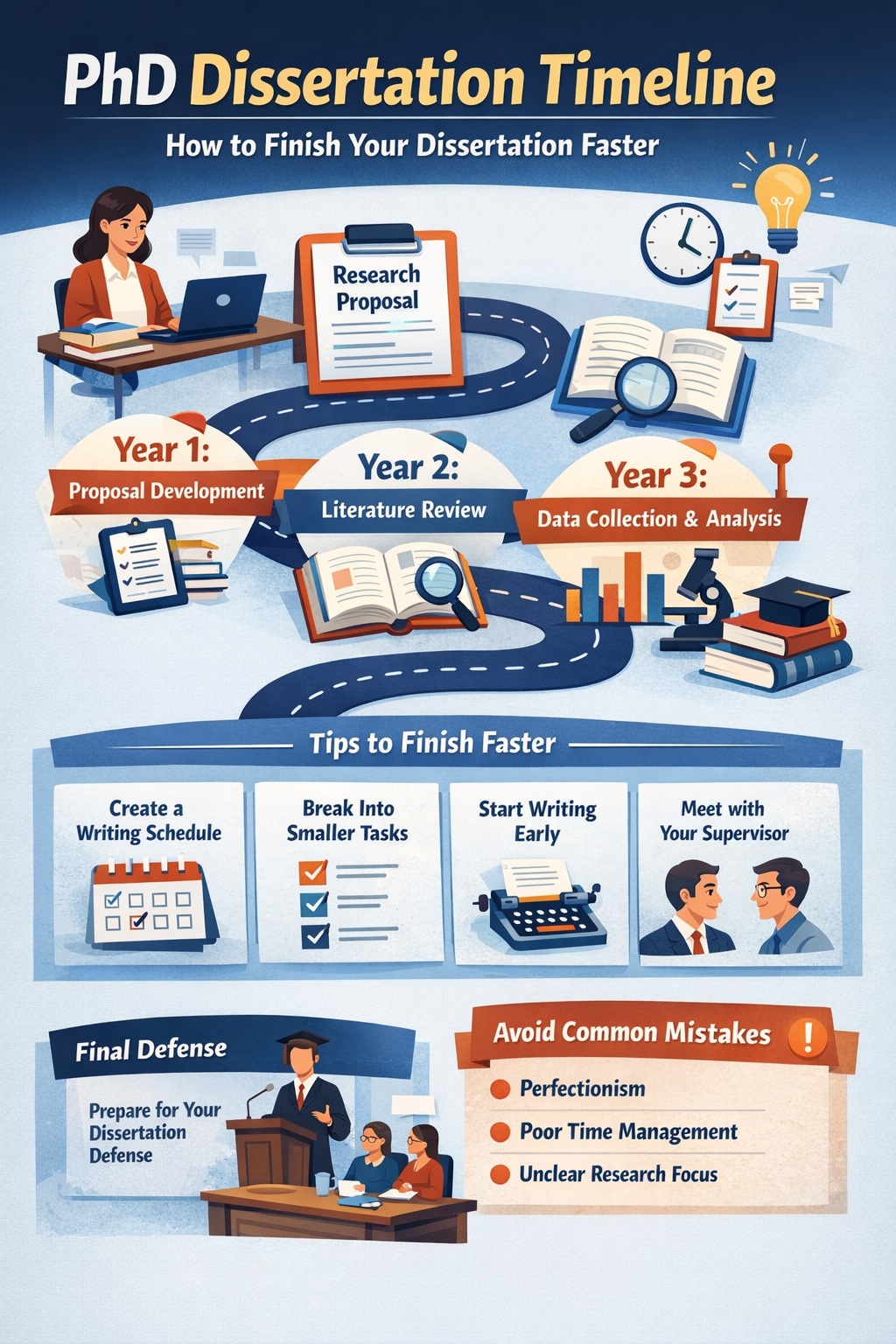
PhD Dissertation Timeline: How to Finish Your Dissertation Faster
Completing a PhD dissertation is one of the most challenging and rewarding milestones in an academic career. For many doctoral students, the dissertation stage can feel overwhelming because it requires years of research, writing, analysis, and revision. Without a clear plan, it is easy to fall behind schedule and extend the process far beyond the expected timeframe.
A well-structured dissertation timeline can help you stay organized, productive, and focused on finishing your work efficiently. While every PhD journey is different, understanding how to break the process into manageable stages can significantly reduce stress and increase productivity. This guide explains a practical PhD dissertation timeline and offers strategies to help you complete your dissertation faster without sacrificing quality.
Understanding the PhD Dissertation Timeline
A dissertation timeline refers to the structured plan that outlines each stage of the dissertation process—from topic selection to final defense. Most PhD programs expect students to complete their dissertations within three to five years after coursework, although the timeline can vary depending on the field, research complexity, and institutional requirements.
A clear timeline helps students track progress, maintain motivation, and avoid unnecessary delays. Instead of approaching the dissertation as one massive project, dividing it into smaller stages allows you to focus on achievable goals.
Why a Structured Timeline Matters
A structured timeline helps doctoral candidates manage time effectively and maintain consistent progress. Many students struggle with procrastination or perfectionism, which can slow down writing and research. By setting realistic deadlines for each stage, you ensure that the dissertation continues moving forward.
A timeline also improves communication with supervisors and committee members. When expectations and milestones are clear, feedback can be received earlier, preventing major revisions later in the process.
Typical PhD Dissertation Timeline (3–4 Years)
Although the exact schedule varies by university and discipline, most dissertations follow a similar progression. The timeline below represents a typical structure that doctoral candidates can adapt according to their program.
Year 1: Topic Selection and Proposal Development
The first stage of the dissertation journey focuses on defining your research direction and preparing your proposal. This period is critical because a well-designed research plan lays the foundation for the entire project.
During this stage, students identify a research gap, review existing literature, and refine their research questions. They work closely with supervisors to determine whether the topic is feasible, original, and relevant to the academic field.
By the end of this stage, students usually submit a formal dissertation proposal outlining their research objectives, methodology, and expected contributions.
Key Tasks During Year 1
Students typically complete several important steps during the first year:
- Selecting a research topic
- Conducting a preliminary literature review
- Defining research questions or hypotheses
- Choosing appropriate research methods
- Writing and defending the dissertation proposal
Successfully completing the proposal stage ensures that the research plan is approved and ready for implementation.
Year 2: Literature Review and Research Design
Once the proposal is approved, the next phase focuses on building the theoretical framework and finalizing the research design. The literature review becomes a central part of the dissertation during this stage.
The purpose of the literature review is to analyze previous studies related to your research topic. This helps demonstrate that your study addresses a genuine gap in knowledge and contributes something new to the field.
Students also finalize their research methodology during this phase. This may involve designing surveys, preparing interview questions, developing experiments, or setting up data collection systems.
Key Components of the Literature Review
A strong literature review usually includes several important elements:
- Analysis of major theories related to the topic
- Critical evaluation of previous research
- Identification of gaps in the existing literature
- Explanation of how the current study fills those gaps
A well-written literature review not only supports the research problem but also establishes the academic context for the dissertation.
Year 3: Data Collection and Analysis
The third stage of the dissertation timeline focuses on gathering and analyzing research data. This is often the most time-consuming phase, especially for students conducting experiments, surveys, fieldwork, or interviews.
The data collection process depends on the research methodology. For example, quantitative studies may involve statistical surveys, while qualitative research may require interviews, observations, or case studies.
Once data is collected, students begin the process of analyzing results using appropriate tools and techniques. This may include statistical software, thematic analysis, coding methods, or experimental evaluation.
Importance of Accurate Data Analysis
Data analysis is a critical step because it directly affects the credibility of the research findings. Proper analysis helps ensure that conclusions are supported by reliable evidence.
Students must carefully document their methods, procedures, and results so that readers can understand how conclusions were reached.
Year 4: Writing the Dissertation
After data analysis is completed, students begin writing the full dissertation. While many doctoral candidates delay writing until the research phase is finished, successful students often start drafting chapters earlier.
Writing the dissertation involves combining all research components into a structured academic document. Most dissertations follow a common structure that includes several chapters.
Standard Dissertation Structure
Most PhD dissertations include the following chapters:
- Introduction – Overview of the research topic and objectives
- Literature Review – Analysis of existing studies
- Methodology – Explanation of research methods
- Results – Presentation of research findings
- Discussion – Interpretation of results and implications
- Conclusion – Summary of contributions and future research directions
Each chapter must clearly connect with the research objectives and support the overall argument of the dissertation.
Strategies to Finish Your Dissertation Faster
Many doctoral students worry about completing their dissertation on time. Fortunately, several strategies can help accelerate the process while maintaining academic quality.
Create a Detailed Writing Schedule
One of the most effective ways to finish a dissertation faster is to create a structured writing schedule. Instead of waiting for inspiration, successful researchers treat writing as a daily habit.
Setting weekly writing goals can significantly improve productivity. For example, writing 500 to 1,000 words per day can help complete a full dissertation within a few months.
Consistency is far more important than occasional bursts of productivity.
Break the Dissertation Into Small Tasks
A dissertation can feel overwhelming if viewed as one large project. Breaking it into smaller tasks makes the process easier to manage.
For example, instead of setting a vague goal such as “write the literature review,” you can divide it into specific sections such as:
- Theoretical background
- Key research studies
- Critical analysis of literature
- Research gaps
Completing smaller tasks regularly creates a sense of progress and reduces procrastination.
Start Writing Early
Many students make the mistake of postponing writing until all research is finished. However, writing early drafts during the research phase can save significant time later.
For instance, students can begin drafting the literature review and methodology chapters while conducting research. Early writing also allows supervisors to provide feedback sooner, reducing major revisions later.
Communicate Regularly With Your Supervisor
Supervisor feedback plays a crucial role in the dissertation process. Regular meetings ensure that your research remains aligned with academic expectations.
Waiting too long to share drafts can lead to extensive revisions. Instead, sending smaller sections frequently allows supervisors to provide guidance before problems become serious.
Open communication also helps maintain motivation and accountability.
Use Productivity Techniques
Several productivity techniques can help doctoral students maintain focus while writing their dissertation.
One effective method is the Pomodoro Technique, which involves working for 25-minute focused sessions followed by short breaks. This approach improves concentration and prevents mental fatigue.
Other helpful strategies include:
- Setting daily writing goals
- Eliminating distractions
- Using reference management software
- Tracking research progress
These small habits can significantly increase productivity over time.
Common Mistakes That Delay Dissertation Completion
Many doctoral students face delays because of common mistakes during the dissertation process. Recognizing these challenges early can help prevent unnecessary setbacks.
Perfectionism
Perfectionism is one of the biggest obstacles to finishing a dissertation. Many students spend excessive time revising small details instead of completing full drafts.
Remember that the dissertation does not need to be perfect in the first draft. The goal is to produce a complete version that can later be improved through revisions.
Poor Time Management
Without a clear schedule, dissertation work can easily be postponed. Students who treat dissertation writing as an occasional task often struggle to finish on time.
Creating weekly deadlines and maintaining a consistent writing routine is essential for steady progress.
Lack of Clear Research Focus
A vague research question can lead to confusion and unnecessary revisions. Clearly defining your research objectives at the proposal stage helps avoid major changes later.
A focused research question keeps the dissertation organized and manageable.
Final Dissertation Review and Defense
The final stage of the dissertation timeline involves editing, formatting, and preparing for the dissertation defense. After completing the full draft, students typically submit their work to supervisors and committee members for evaluation.
Revisions may be required based on feedback. These revisions usually involve clarifying arguments, improving analysis, or strengthening conclusions.
Preparing for the Dissertation Defense
The dissertation defense is the final academic evaluation of the research project. During this stage, students present their findings and answer questions from a panel of experts.
Preparing for the defense requires a deep understanding of the research, methodology, and results. Students should practice explaining their study clearly and confidently.
A successful defense marks the completion of the PhD journey.
Conclusion
Completing a PhD dissertation is a complex and demanding process, but a well-planned timeline can make the journey far more manageable. By dividing the dissertation into clear stages—proposal development, literature review, research, writing, and defense—doctoral students can maintain steady progress and avoid unnecessary delays.
Finishing a dissertation faster does not mean sacrificing quality. Instead, it requires strategic planning, consistent writing habits, and effective communication with supervisors. By setting realistic goals, breaking tasks into smaller steps, and maintaining discipline throughout the process, doctoral candidates can successfully complete their dissertations on time.
Ultimately, the dissertation represents years of dedication, intellectual growth, and original research. With the right timeline and strategies in place, students can transform what seems like an overwhelming challenge into a structured and achievable academic accomplishment.

