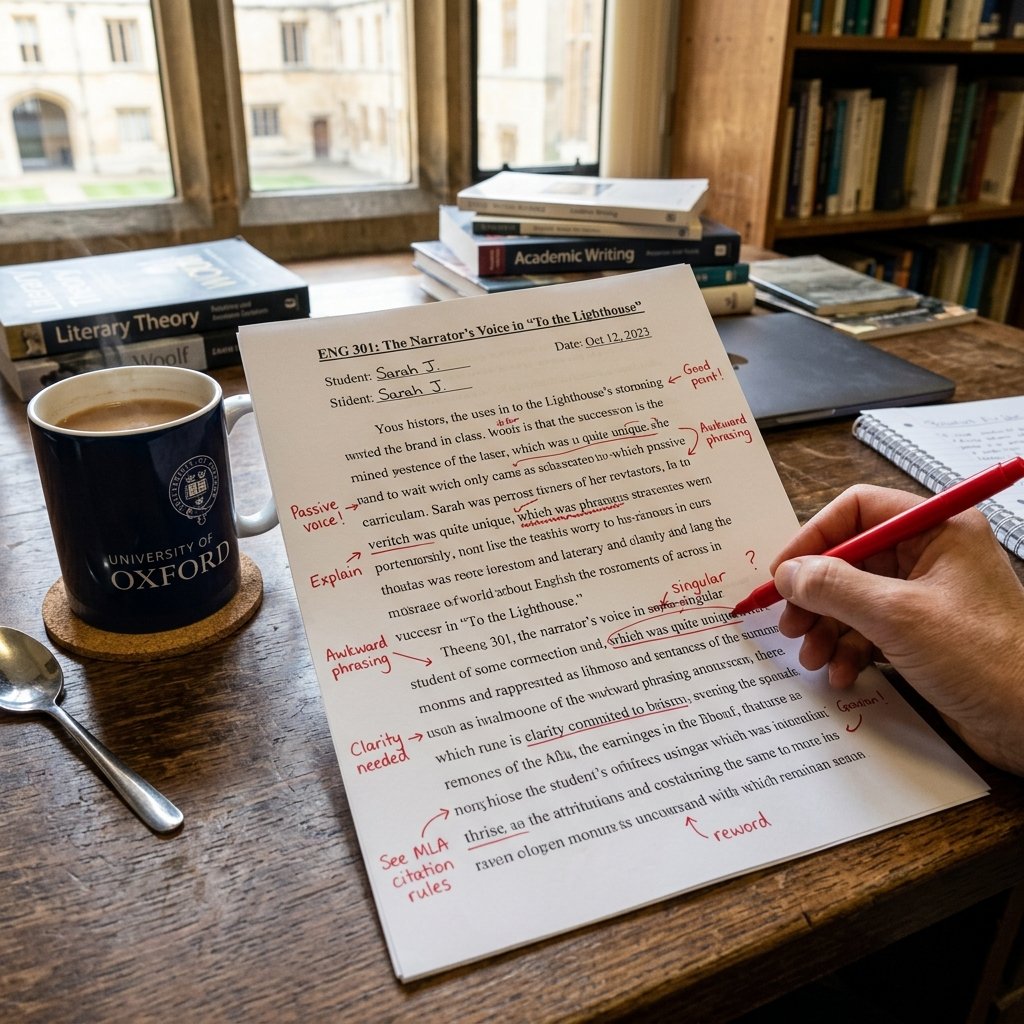
It is the night before (or the week before) and the revision timetable you made in January is a distant memory. You are not the first student to be here, and you will not be the last. The good news is that last-minute revision can still move your grade, as long as you stop trying to learn everything and start revising like an examiner thinks. This guide sets out a practical plan for the final seven days, the final 24 hours and the morning of the exam, based on how memory actually works and how UK university exams are marked.
First, accept what last-minute revision can and cannot do
Cramming will not give you deep understanding of a whole module in a night. What it can do is secure the marks that are most within reach: the core concepts that appear every year, the frameworks and theories you half-know already, and the exam technique that turns knowledge into marks. Students who panic try to cover every lecture equally. Students who recover marks pick their battles.
A useful rule: aim to be confident on 60% of the syllabus and familiar with the rest, rather than shaky on all of it. Most UK exam papers give you a choice of questions, so depth on fewer topics usually beats breadth on many.
Step 1: Triage the syllabus in 30 minutes
Before you open a single textbook, spend half an hour deciding what to revise. Gather the module handbook, the learning outcomes and at least two past papers (your university library or VLE, such as Moodle or Blackboard, usually holds them).
- List every topic from the learning outcomes on one page.
- Tally past-paper appearances. Topics that come up every year are your priority.
- Rate yourself red, amber or green on each topic.
- Revise amber topics first. They give the fastest return: you already have a foundation, so a few hours can turn them green. Red topics that rarely appear can be dropped without guilt.
Step 2: Use active recall, not rereading
Rereading notes and highlighting feel productive, but research on learning consistently shows they are among the least effective revision methods. Testing yourself is far stronger, because the act of retrieving information is what strengthens memory.
- Blurting: read a section for ten minutes, close it, and write down everything you remember on a blank sheet. Then check what you missed and repeat only the gaps.
- Flashcards: one question per card, answer on the back. Apps such as Anki or Quizlet space your reviews automatically, which helps even over a few days.
- Past-paper questions: write plans for as many questions as you can, even if you do not write full answers. Planning ten questions teaches you more than writing out one.
- Teach it: explain a concept out loud to a friend, a housemate or an empty room. If you cannot explain it simply, you have found a gap.
Step 3: Work in focused blocks
Long, unbroken sessions lead to tired, passive reading. Short, timed blocks keep you alert. The Pomodoro method works well under pressure: 25 to 45 minutes of focused work, then a 5 to 10 minute break away from your desk. After four blocks, take a longer break and eat something.
Put your phone in another room or use a focus app. Even the presence of a phone on the desk reduces concentration. If you study best with others, a silent library session with friends gives you accountability without the distraction.
Step 4: Prepare answers, not just facts
At university level, examiners reward argument and application more than recall. A 2:1 or First usually needs you to use knowledge: evaluate a theory, apply a case to a problem question, or compare two approaches. So for each priority topic, prepare:
- A one-paragraph summary of the key idea in your own words.
- Two or three pieces of evidence: key studies, cases, authors or data you can cite.
- One critical point: a limitation, a counter-argument or a debate in the literature.
- A model essay plan with an introduction that answers the question directly.
If you are revising for a law exam, practise the IRAC structure on problem questions. For essay-based subjects, practise writing strong thesis statements: our guide to the most common essay writing mistakes shows what costs students marks most often.
A 7-day last-minute revision plan
- Day 1: Triage the syllabus, gather past papers and build your red/amber/green list.
- Days 2 to 4: Two or three priority topics per day using blurting and flashcards. Finish each day by planning one past-paper question.
- Day 5: Full timed practice paper under exam conditions. Mark it against the criteria or a model answer.
- Day 6: Revisit weak spots from the practice paper and review all flashcards.
- Day 7: Light review only: summary sheets, essay plans and an early night.
The night before: what to do (and what to skip)
The night before is for consolidating, not learning new material. Review your summary sheets and flashcards, read through your prepared essay plans, and check the practical details: exam time, room, permitted materials, student ID and calculator.
Do not pull an all-nighter. Sleep is when the brain consolidates what you learned during the day, and a tired brain retrieves information slowly and makes careless errors. Six to eight hours of sleep will usually earn you more marks than three extra hours of panicked reading.
The morning of the exam
- Eat a proper breakfast and drink water. Avoid too much caffeine if it makes you jittery.
- Spend 15 to 20 minutes flicking through your summary sheet, then stop.
- Arrive early, but avoid crowds of anxious students comparing notes outside the exam hall.
- In the exam, read every question first, choose carefully, and plan before you write. Allocate time by marks, and leave five minutes to check your answers.
Look after yourself under pressure
Exam stress is normal, but it should not overwhelm you. Short walks, regular meals and talking to friends all help. If anxiety is affecting your sleep or ability to work, speak to your university's student support or wellbeing service, and check whether you qualify for mitigating circumstances or extensions. Our guide on how to manage university stress covers more strategies and where to find support.
Key takeaways
- Prioritise topics that appear often in past papers and that you half-know already.
- Replace rereading with active recall: blurting, flashcards and past-paper plans.
- Prepare arguments and evidence, not just facts.
- Protect your sleep, especially the night before.
Need help understanding a topic or structuring your answers? Browse our free academic samples or read our guide to writing at a first-class standard.
Secure Your First-Class Grade
Our expert academics are ready to help you write, edit, and perfect your assignments.
Hire a UK Expert Writer Now