


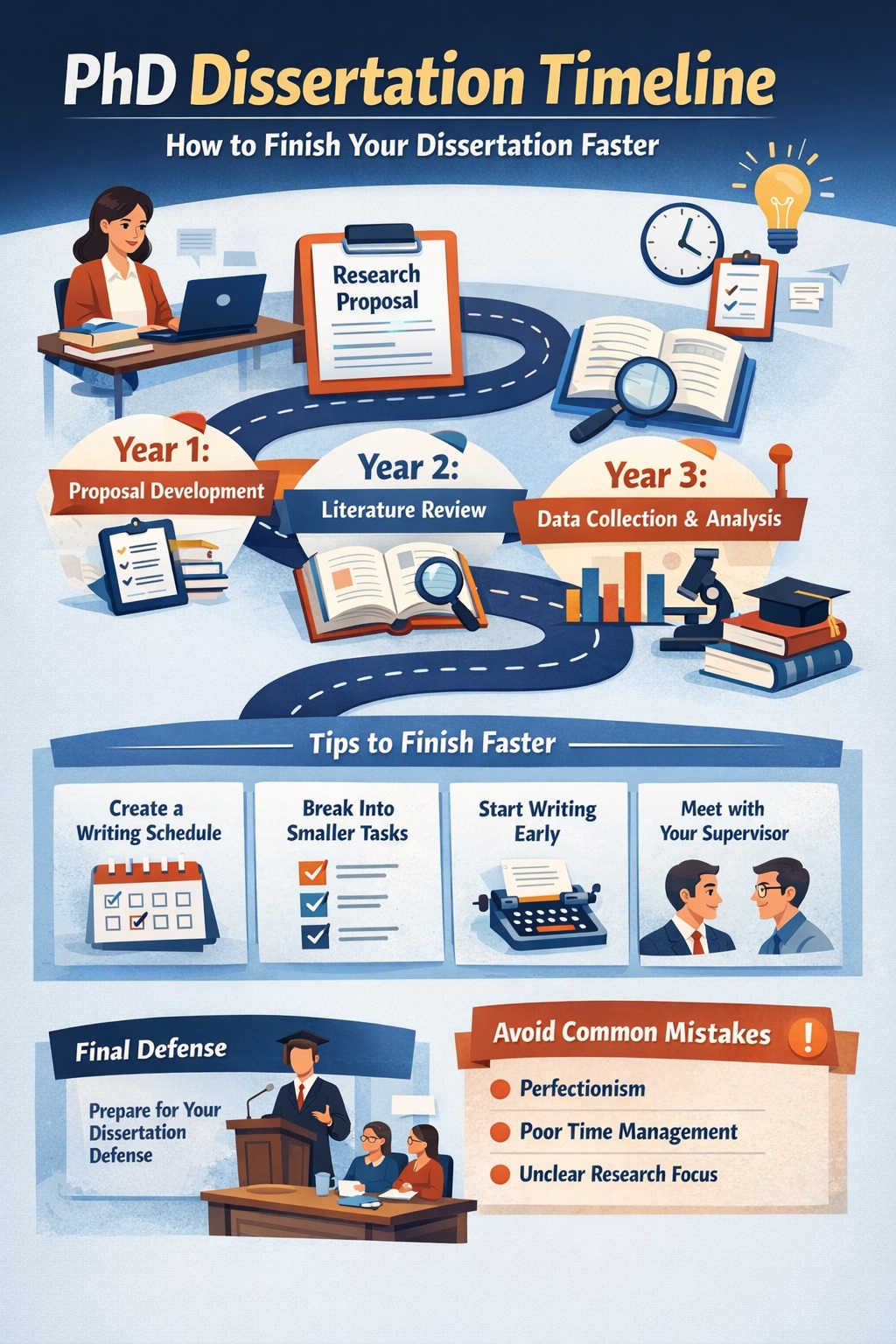
Selecting the right PhD dissertation topic is one of the most important decisions a doctoral student will make during their academic journey. A dissertation topic defines the direction of your research, shapes your academic identity, and influences your future career opportunities. Because a PhD dissertation usually takes several years to complete, choosing a topic that is both meaningful and manageable is essential. Many students struggle at this stage because they want a topic that is original, impactful, and aligned with their personal interests. However, the process becomes easier when approached strategically.
This guide explains how to choose the perfect PhD dissertation topic by exploring practical steps, research strategies, and expert tips that can help doctoral students make an informed decision.
Understanding the Importance of a Dissertation Topic
Before selecting a topic, it is important to understand why the dissertation topic matters so much.
The Foundation of Your Doctoral Research
Your dissertation topic acts as the foundation of your entire doctoral research project. It determines the questions you ask, the methods you use, and the literature you review. A well-chosen topic provides a clear research direction and keeps you motivated throughout the long research process.
When the topic aligns with your interests and expertise, it becomes easier to stay engaged and productive. On the other hand, choosing a topic simply because it seems popular or easy may lead to frustration later.
Impact on Academic and Professional Career
Your dissertation topic can influence your future career path. Many researchers continue working in the same area after completing their PhD. Publications, conference presentations, and collaborations often grow out of dissertation research. Therefore, selecting a topic that aligns with your long-term goals is highly beneficial.
For example, if you plan to work in academia, your dissertation should contribute new knowledge to your field. If you aim for industry or policy work, selecting a topic with practical applications can strengthen your professional profile.
Start With Your Research Interests
One of the best starting points for choosing a dissertation topic is identifying your genuine research interests.
Reflect on Your Academic Background
Think about the courses, research projects, or assignments that excited you the most during your master’s or undergraduate studies. These experiences often reveal areas where your curiosity naturally lies.
Ask yourself questions such as:
- Which subjects did I enjoy studying the most?
- Which topics sparked my curiosity?
- What problems in my field do I want to solve?
Your answers can help narrow down potential research areas.
Identify Real-World Problems
Many strong dissertation topics emerge from real-world challenges. Look at issues currently affecting your field or society and consider how research could address them.
For example, students in technology fields may explore topics related to artificial intelligence, cybersecurity, or data privacy. In social sciences, researchers may focus on topics such as education inequality, digital media influence, or public policy.
Connecting your dissertation to real-world problems increases the relevance and impact of your research.
Conduct Preliminary Literature Review
A preliminary literature review is essential before finalizing a dissertation topic.
Explore Existing Research
Start by reading academic journals, books, and conference papers related to your area of interest. This helps you understand what research has already been conducted and where gaps exist.
Many students initially propose topics that are either too broad or already heavily studied. Reviewing the literature helps refine your focus and avoid duplication.
Look for:
- Unanswered research questions
- Conflicting findings in previous studies
- Emerging trends in your field
These areas often provide excellent dissertation opportunities.
Identify Research Gaps
A strong PhD dissertation usually addresses a gap in existing knowledge. This does not mean the topic must be completely new, but it should offer a new perspective, method, or dataset.
For example, a researcher might:
- Apply an existing theory to a new population
- Use advanced methods to revisit previous findings
- Study a rapidly evolving phenomenon
By identifying gaps in the literature, you can ensure that your research contributes meaningful insights.
Consider the Scope and Feasibility
Many PhD students make the mistake of choosing topics that are too broad or unrealistic.
Avoid Overly Broad Topics
A dissertation topic must be focused enough to study in depth within the time frame of a PhD program.
For instance, a topic like:
“The Impact of Technology on Society”
is far too broad. However, a more focused version could be:
“The Impact of Artificial Intelligence Tools on Student Learning Outcomes in UK Universities.”
Narrowing your focus allows you to conduct deeper and more meaningful analysis.
Evaluate Available Resources
Before committing to a topic, consider whether you have access to the necessary resources, such as:
- Research data
- Laboratory equipment
- Fieldwork opportunities
- Funding
- Institutional support
If the topic requires resources that are difficult to obtain, completing the research may become challenging.
Align the Topic With Your Supervisor’s Expertise
Your PhD supervisor plays a critical role in guiding your research.
Seek Expert Guidance
Supervisors usually have deep knowledge in specific research areas. Choosing a topic that aligns with their expertise can provide valuable mentorship and feedback.
A supervisor familiar with your topic can help you:
- Refine research questions
- Recommend key literature
- Suggest appropriate methodologies
- Avoid common research mistakes
Their experience can significantly improve the quality of your dissertation.
Maintain Intellectual Independence
While supervisor input is important, the dissertation should still reflect your own intellectual curiosity. The best topics often emerge through collaboration between the student and supervisor.
You should feel passionate about the topic because you will spend several years researching and writing about it.
Evaluate the Research Significance
A good dissertation topic should contribute something meaningful to your academic field.
Academic Contribution
Your research should advance knowledge in some way. This might include:
- Developing a new theory
- Improving research methods
- Challenging existing assumptions
- Providing new empirical evidence
Universities expect doctoral research to make an original contribution, even if it is modest.
Societal Relevance
Increasingly, universities and funding bodies encourage research that benefits society. A dissertation topic that addresses social, economic, or technological challenges may have greater impact.
For example, research on climate change, artificial intelligence ethics, healthcare access, or digital education can provide valuable insights for policymakers and industry leaders.
Test Your Topic With Research Questions
Once you have a potential topic, the next step is turning it into clear research questions.
Develop Specific Questions
Strong research questions guide the entire dissertation. They should be:
- Clear and focused
- Researchable with available methods
- Relevant to existing literature
- Capable of producing meaningful findings
For example, instead of a vague question like:
“How does technology affect education?”
You might ask:
“What is the impact of AI-powered tutoring systems on student engagement in online learning environments?”
Clear research questions help define the scope of your study.
Ensure Methodological Compatibility
Your topic should also align with appropriate research methods. Depending on your field, you might use:
- Quantitative methods (surveys, experiments, statistical analysis)
- Qualitative methods (interviews, case studies, ethnography)
- Mixed methods approaches
Make sure the research design is practical and achievable within your PhD timeline.
Assess Long-Term Motivation
Because a PhD can take several years to complete, maintaining motivation is essential.
Choose a Topic You Care About
You will spend countless hours reading, analyzing, and writing about your topic. If the subject does not genuinely interest you, staying motivated will be difficult.
Passion for the topic often leads to deeper insights and higher-quality research.
Consider Future Research Opportunities
A well-chosen topic can open doors to future research projects, academic collaborations, and career opportunities.
For example, your dissertation might lead to:
- Journal publications
- Conference presentations
- Research grants
- Postdoctoral opportunities
Thinking long-term can help you choose a topic that supports your professional goals.
Avoid Common Mistakes When Choosing a Topic
Many PhD students encounter similar challenges when selecting a dissertation topic.
Choosing a Topic That Is Too Ambitious
Some students attempt to solve extremely large problems within their dissertation. While ambition is admirable, unrealistic goals can make the project difficult to complete.
Focus on a manageable research question that can realistically be answered during your PhD program.
Ignoring Existing Literature
Another mistake is selecting a topic without thoroughly reviewing previous research. This may lead to duplication or weak theoretical foundations.
A strong literature review ensures your topic builds upon existing scholarship.
Changing Topics Too Frequently
While refining your topic is normal, constantly changing it can delay progress. Once you identify a viable topic, commit to developing it further.
Practical Steps to Finalize Your Dissertation Topic
To make the process more manageable, follow these practical steps.
Step 1: Brainstorm Potential Topics
Start by listing several areas of interest related to your field. At this stage, focus on generating ideas rather than evaluating them.
Step 2: Conduct Initial Research
Read key articles and books related to your shortlisted topics. Identify trends, debates, and research gaps.
Step 3: Discuss With Advisors
Share your ideas with your supervisor or academic mentors. Their feedback can help refine your topic and highlight potential challenges.
Step 4: Narrow the Focus
Transform broad ideas into specific research questions. Ensure the topic is clear, feasible, and academically significant.
Step 5: Write a Short Proposal
Many universities require a brief research proposal before approving the dissertation topic. This document usually includes:
- Research objectives
- Literature overview
- Proposed methodology
- Expected contributions
Preparing a proposal helps clarify your research direction.
Examples of Strong PhD Dissertation Topics
To better understand what makes a strong dissertation topic, here are a few examples across different disciplines.
Technology
- Ethical implications of artificial intelligence in healthcare decision-making
- Cybersecurity challenges in cloud-based financial systems
Education
- The impact of digital learning platforms on student engagement in higher education
- Strategies for improving online teaching effectiveness in remote learning environments
Business and Economics
- The role of digital transformation in small business growth
- Consumer trust and data privacy in e-commerce platforms
Social Sciences
- Social media influence on political participation among young voters
- Migration patterns and economic integration in urban areas
Each of these topics is focused, researchable, and relevant to current issues.
Conclusion
Choosing the perfect PhD dissertation topic is a critical step in the doctoral journey. A well-selected topic provides direction, motivation, and opportunities for meaningful academic contributions. By carefully considering your interests, reviewing existing literature, evaluating feasibility, and seeking expert guidance, you can identify a topic that aligns with both your research goals and career aspirations.
Remember that the ideal dissertation topic is not necessarily the most complex or groundbreaking idea. Instead, it is one that is focused, feasible, and capable of generating valuable insights within your field.
Taking the time to thoughtfully select your topic will not only improve the quality of your research but also make the entire PhD experience more rewarding and productive.
