

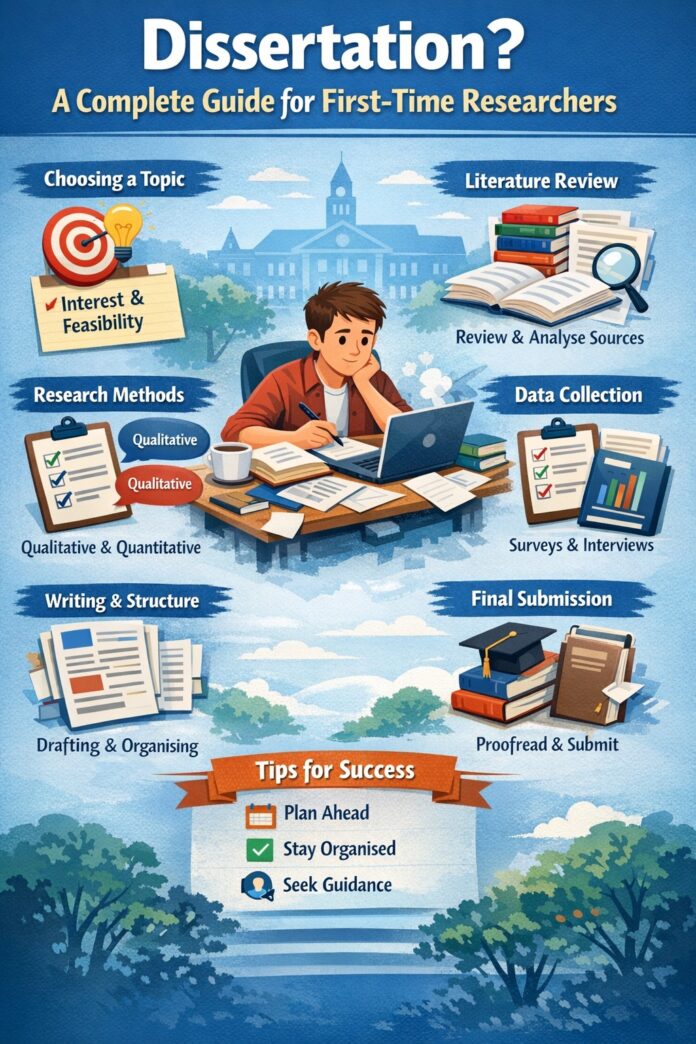
Writing a dissertation can feel like stepping into uncharted territory, especially for first-time researchers. It is a significant academic undertaking that allows students to explore a subject in depth, demonstrate independent thinking, and contribute original insights to their field. While the process may seem daunting, understanding the key stages, methods, and expectations can make it much more manageable. This guide is designed to provide a comprehensive roadmap for first-time researchers preparing to tackle their dissertation.
Understanding What a Dissertation Is
A dissertation is an extended piece of academic writing that presents research findings on a specific topic. Unlike shorter essays or reports, a dissertation requires rigorous planning, extensive research, and careful analysis. It typically involves identifying a research question, reviewing existing literature, conducting original research, and presenting results in a structured format.
In the UK, dissertations are often a mandatory component of undergraduate and postgraduate programmes. They provide students with the opportunity to demonstrate their mastery of research methodologies, critical thinking, and academic writing. The final submission is usually evaluated based on clarity, originality, methodology, and the quality of analysis.
The Difference Between a Dissertation and a Thesis
While the terms “dissertation” and “thesis” are sometimes used interchangeably, there are subtle differences. In the UK, a dissertation is usually associated with undergraduate or taught master’s degrees, whereas a thesis is more common in doctoral studies. A dissertation demonstrates the student’s ability to conduct independent research within a set timeframe, while a thesis involves more original contribution and extensive research over several years.
Choosing a Dissertation Topic
Selecting the right topic is arguably one of the most crucial steps in the dissertation process. A well-chosen topic can make research enjoyable and manageable, while a poorly chosen one can lead to unnecessary stress and difficulty.
Identify Your Interests
Start by considering areas of your subject that genuinely interest you. Passion for your topic can sustain motivation through long research hours. Review your past coursework, lectures, and discussions with professors to identify recurring themes or unanswered questions that intrigue you.
You also read:How to write a PHD Dissertion
Assess Feasibility
Once you have a list of potential topics, evaluate their feasibility. Consider the availability of resources, data, and literature. Ensure that your topic is neither too broad, which can make research overwhelming, nor too narrow, which may limit your ability to find enough material. Consulting with your academic supervisor at this stage is highly recommended to refine your topic.
Formulate a Research Question
A clear research question is the backbone of your dissertation. It provides focus and direction, guiding your literature review, methodology, and analysis. A good research question should be specific, researchable, and significant to your field. For example, instead of asking, “What is leadership?” you could ask, “How does transformational leadership affect employee motivation in UK healthcare organisations?”
Conducting a Literature Review
The literature review is a critical component of your dissertation. It involves reviewing existing research to understand what is already known about your topic, identify gaps in knowledge, and position your research within the academic debate.
Finding Relevant Sources
Start by searching academic databases such as Google Scholar, JSTOR, or your university library. Focus on peer-reviewed journals, books, and reputable reports. Avoid relying solely on websites or unverified sources. Organising sources using reference management software such as EndNote, Mendeley, or Zotero can save significant time and ensure accurate citations.
Analysing and Synthesising Literature
A literature review is not just a summary of sources. It requires critical analysis and synthesis. Look for patterns, trends, and debates within the existing research. Identify areas where evidence is lacking or where previous findings are contradictory. This will help justify the need for your study and clarify how your research contributes to the field.
Structuring Your Literature Review
A well-structured literature review typically starts with an introduction outlining the scope and purpose. The main body can be organised thematically, chronologically, or methodologically, depending on your topic. Conclude by highlighting the gaps in existing research and linking them to your research question.
Designing Your Research Methodology
Your methodology explains how you will conduct your research. It provides the framework for collecting and analysing data and ensures that your research is rigorous and reproducible.
Choosing Between Qualitative and Quantitative Methods
Research methods can be broadly categorised into qualitative and quantitative approaches.
- Qualitative methods focus on exploring experiences, opinions, and behaviours. They often involve interviews, focus groups, or content analysis. Qualitative research provides rich, detailed insights but may be limited in generalisability.
- Quantitative methods focus on measuring variables and testing hypotheses using statistical analysis. Surveys, experiments, and secondary data analysis are common quantitative techniques. Quantitative research offers objectivity and broader applicability but may lack depth in understanding context.
Some dissertations use a mixed-methods approach, combining qualitative and quantitative techniques to gain a comprehensive perspective.
Ethical Considerations
Ethical research is paramount. Obtain necessary approvals from your university’s ethics committee, especially when your research involves human participants. Ensure informed consent, confidentiality, and data protection. Consider any potential harm to participants and take steps to minimise it.
Planning Your Research
Create a detailed plan outlining your data collection methods, timeline, and resources required. Break down your research into manageable stages to avoid feeling overwhelmed. A clear plan can help keep your project on track and ensure that you meet deadlines.
Collecting and Analysing Data
Data collection and analysis are at the heart of your dissertation. The methods you choose will depend on your research question and methodology.
Data Collection
For quantitative research, this could involve distributing surveys, conducting experiments, or using existing datasets. For qualitative research, interviews, observations, or document analysis may be used. Keep detailed records and ensure consistency in your procedures.
Analysing Data
Analysis involves making sense of the data you have collected. Quantitative analysis often requires statistical techniques such as regression, correlation, or t-tests. Qualitative analysis may involve coding responses, identifying themes, and interpreting meanings. Use software tools like SPSS, R, NVivo, or Excel to assist with analysis and ensure accuracy.
Presenting Findings
Your findings should be presented clearly and logically. Use tables, charts, and graphs where appropriate to illustrate key points. Avoid including raw data unless it is necessary to support your conclusions. Discuss your findings in relation to your research question and existing literature.
Writing Your Dissertation
Writing a dissertation is a major undertaking, but breaking it into sections can make it more manageable. A typical structure includes:
Introduction
Introduce your topic, outline the research question, and explain the significance of your study. Briefly describe the methodology and provide an overview of the dissertation structure.
Literature Review
Present your critical analysis of existing research and identify gaps that your study will address.
Methodology
Explain your research design, data collection methods, and ethical considerations. Justify your choices and explain how they support your research objectives.
Results
Present your research findings in a clear, organised manner. Use visual aids where appropriate and highlight patterns or key insights.
Discussion
Interpret your results in the context of the literature. Discuss implications, limitations, and any unexpected findings. Consider how your research contributes to the field and what future studies could explore.
Conclusion
Summarise your main findings, restate their significance, and reflect on the research process. Avoid introducing new information in the conclusion.
References and Appendices
List all sources cited in your dissertation following your institution’s preferred citation style (e.g., APA, Harvard, or MLA). Appendices can include supplementary materials such as questionnaires, interview transcripts, or raw data.
Tips for First-Time Researchers
Start Early and Plan Ahead
Time management is crucial. Begin your dissertation early, set realistic milestones, and regularly review your progress. Avoid leaving major tasks until the last minute, as this can compromise the quality of your work.
Stay Organised
Maintain an organised system for notes, references, and drafts. Consider using digital tools like Trello, Notion, or OneNote to track tasks and ideas.
Seek Feedback
Regularly consult your supervisor and peers. Constructive feedback can help you refine your research question, improve your methodology, and strengthen your writing.
Revise and Proofread
Writing is an iterative process. Allow time for multiple drafts and thorough proofreading. Check for clarity, consistency, grammar, and adherence to your institution’s formatting guidelines.
Take Care of Yourself
Research can be demanding. Maintain a healthy work-life balance, take breaks, and seek support if you experience stress. Mental well-being is essential for sustained productivity and creativity
Common Challenges and How to Overcome Them
First-time researchers often face challenges such as writer’s block, data collection difficulties, and analysis complexity. Approaching these issues methodically can help.
- Writer’s Block: Break your writing into smaller tasks, set daily word targets, and start with sections you feel most confident about.
- Data Collection Issues: Have a backup plan and consider alternative methods or datasets.
- Analysis Complexity: Use software tools, online tutorials, and support from your supervisor to navigate complex analyses.
Conclusion
Completing a dissertation for the first time is a challenging but rewarding experience. By understanding the process, choosing a manageable topic, planning carefully, and applying rigorous research methods, first-time researchers can produce work that is both meaningful and academically credible. Remember that a dissertation is not just an assignment—it is an opportunity to contribute your voice to the academic community, develop critical skills, and prepare for future research or professional endeavours. With careful preparation, dedication, and a clear roadmap, even first-time researchers can navigate the dissertation journey successfully.

